Book reviews for January 2018
By Robert Ellison.

The World to Come by Dara Horn
4/5

The Fifth Season (The Broken Earth, #1) by N.K. Jemisin
4/5

The Cuban Affair by Nelson DeMille
3/5

Gun buybacks are not a new idea, in fact a mandatory buyback scheme was a big success in Australia. Gun insurance as a means of reducing gun violence isn't either. But what if you combined the two?
Set up a mandatory government run insurance program for all new firearms sales. If you are a 40 year old farmer with a shotgun stored in a gun safe then insurance is pretty cheap. If you are a 19 year old with an assault rifle then it is eyewateringly expensive. The risk that you will do something harmful with the gun is priced into the cost of ownership.
One of the criticisms of gun insurance (and of any gun control measure in general) is that there are so many firearms already in circulation in the US. So take the proceeds of the insurance scheme and use them to buy back guns.
Responsible gun owners are not inconvenienced, we reduce risky firearms sales and slowly draw down the number of uninsured guns in circulation.

This November there will be a limited opportunity to put liquid democracy into action. Limited to District 19 of the California Assembly (where I happen to live) and limited to the candidacy of David Ernst (which is a long shot).
Liquid democracy is a referendum on every act, with the difference that you can delegate your vote to someone you trust instead of voting on every issue yourself. At one extreme it's mob rule and at the other (if you delegate your vote to David) it's no different than the current system. The potential magic is where various groups of voters are powerfully represented by someone who is closer to their ideal candidate. If elected David promises to vote based on a liquid democracy implementation at united.vote.
I think functionally liquid democracy shares some problems with proportional representation / transferable vote schemes. If you end up delegating to blocks that represent 40%, 45% and 15% of voters then the 15% block holds the balance of power and gains undue influence. It raises new problems as well. If my elected representative is just doing what my delegate says and I can change my delegate at any time then there aren't really elections any more. So we've replaced 1 representative with N delegates. Delegates are going to raise money to gain and hold onto power and will become beholden to special interests. Are there term limits for delegates? If we end up with a small pool of powerful delegates does it make any difference if I switch my vote to a group of 0.025% of the electorate?
I'm interested in giving it a try though. I like that I can take back control on issues that I particularly care about. I might well vote for David in November.
So what about united.vote?
You have to pay $1 with a credit card to sign up. This is for voter verification and it's not a steep cost but it is a massive conversion barrier. When I signed up today there were just over 1,000 participants. The site is currently oriented around the US Congress rather than the California Assembly. You don't need a password which is nice. Instead you get emailed a one time code each you log in on a new device.
One big missing feature is some sort of directory of prospective delegates. You can delegate to your existing representative (which is pointless) or search for someone you know but really I want to find someone who closely matches my views and who has a good voting record. This isn't possible right now. Until that's fixed you should delegate your vote to me ;)
The voting record is hard to parse as well. For example Kamala Harris, one of my Senators, has an F. For the votes where she has a score it's 100%, 100%, 92% and 15%. Most votes have no liquid democracy opinion attached (is this a 0?). I need to see the math here.
Having said all that my preferred option is legislative service.
(Photo by chuttersnap on Unsplash)
Google Fit is a great way to keep track of your daily step count without needing to carry a Fitbit or other dedicated tracker. It's not easy to get that data out though, as far as I can tell the only way is Google Takeout which is not made for automation. Luckily there is an API and you can do almost anything with Google Sheets.
If you're looking to export your step count, weight and distance this post has everything you need, just follow the instructions below to get your spreadsheet up and running. This is also a good primer on using OAuth2 with Google Apps Script and should be a decent starting point for a more complex Google Fit integration. If you have any questions or feedback please leave a comment below.
To get started you need a Google Sheet, an apps script project attached to the sheet and a Google API Project that will provide access to the Fitness API. That might sound intimidating but it should only take a few minutes to get everything up and running.
In Google Drive create a new spreadsheet and call it whatever you like. Rename the first tab to 'Metrics'. Enter 'Date' in cell A1, 'Steps' in B1, 'Weight' in C1 and 'Distance' in D1. To grab history as well create another tab called 'History' with the same headers. Next select 'Script editor...' from the Tools menu which will open a new apps script project.
Give the apps script project a name and then select 'Libraries...' from the Resources menu. Next to 'Add a library' enter 1B7FSrk5Zi6L1rSxxTDgDEUsPzlukDsi4KGuTMorsTQHhGBzBkMun4iDF and click Add. This will find the Google OAuth2 library. Choose the most recent version (24 at the time of writing) and click Save. Then select 'Project properties' from the File menu and make a note of the Script ID (a long series of letters and numbers).
Open the Google API Console. Create a new project and name it something like 'Google Fit Sheet'. From the Dashboard click Enabled APIs and services and find and select the Fitness API. Then go to Credentials and create an OAuth Client ID. You'll be asked to create a consent screen, the only field you need to enter is the product name (i.e. 'My Fit App'). Then choose Web Application as the application type. You need to set the name and the authorized redirect URL. The redirect URL is https://script.google.com/macros/d/{SCRIPTID}/usercallback replacing {SCRIPTID} with the actual Script ID you made a note of above. After adding this make a note of the Client ID and Client Secret.
Go back to the apps script project and paste the code below into the Code.gs window:
Right at the top of the code there are spaces to enter the Client ID and Client Secret from the API Console. Enter these and save the project.
Switch back to your Google Sheet and reload. After reloading there will be a Google Fit menu item. First select Authorize... You'll get a screen to authorize the script and then a sidebar with a link. Click the link to authorize the script to access your Google Fit data. You can then close the sidebar and select Get Metrics for Yesterday from the Google Fit menu. You should see a new row added to the spreadsheet with yesterday's date and fitness data.
The final step is to automate pulling in the data. Go back to the apps script project and select Current project's triggers from the Edit menu. Add a trigger to run getMetrics() as a time driven day timer - I recommend between 5 and 6am. You can also click notifications to add an email alert if anything goes wrong, like your Google Fit authorization expiring (in which case you just need to come back and authorize from the Google Fit menu again.
At this point you're all set. Every day the spreadsheet will automatically update with your step count from the day before. You can add charts, moving averages, export to other systems, pull in your weight or BMI, etc. I want to add a seven day moving average step count to this blog somewhere as a semi-public motivational tool... watch this space.
Note that weight will be blank in the spreadsheet for days with no weight data. Google Fit doesn't return the last known weight, only the known value for days where an update was recorded.
If you are looking to extend this sample to other data types then this API explorer page is very helpful for finding data types that the API documentation doesn't list.
A couple of times working on this script I got my authorization in a bad state and started getting a 400 error response from the API. If this happens run your Google Fit app, click the Profile icon at the bottom and then the Settings icon at the top right. Click Manage connected apps and then disconnect the script from Google Fit. Finally run the Reset Settings option from the menu in the sheet and then authorize again.
I updated this post on Jan 21, 2019 to extend the sample to handle weight and distance as well as steps. I also improved the history function to handle many days in one API call rather than a quick hack I added earlier that pulled a day at a time. I'd recommend using the code above rather than anything included in comments below (at least comments before this update).
4/5
4/5
3/5

At BGR Chris Smith writes about Google's prodigious data collection:
"But that doesn’t change the fact that Google collects an incredible amount of data about you, especially from that device you use most, your Android phone"
And so I was amused as a Google Fi subscriber on a Pixel XL running Google Chrome and signed into my Google Account that the ad in the middle of the article was for Project Fi. If Google can't help paying BGR under these set of circumstances then we're some way off from the adtech singularity.
Facebook defends its simple 2 question survey on the trustworthiness of news publishers
What if everyone recognizes a news source and say half of them trust it but it isn't true?
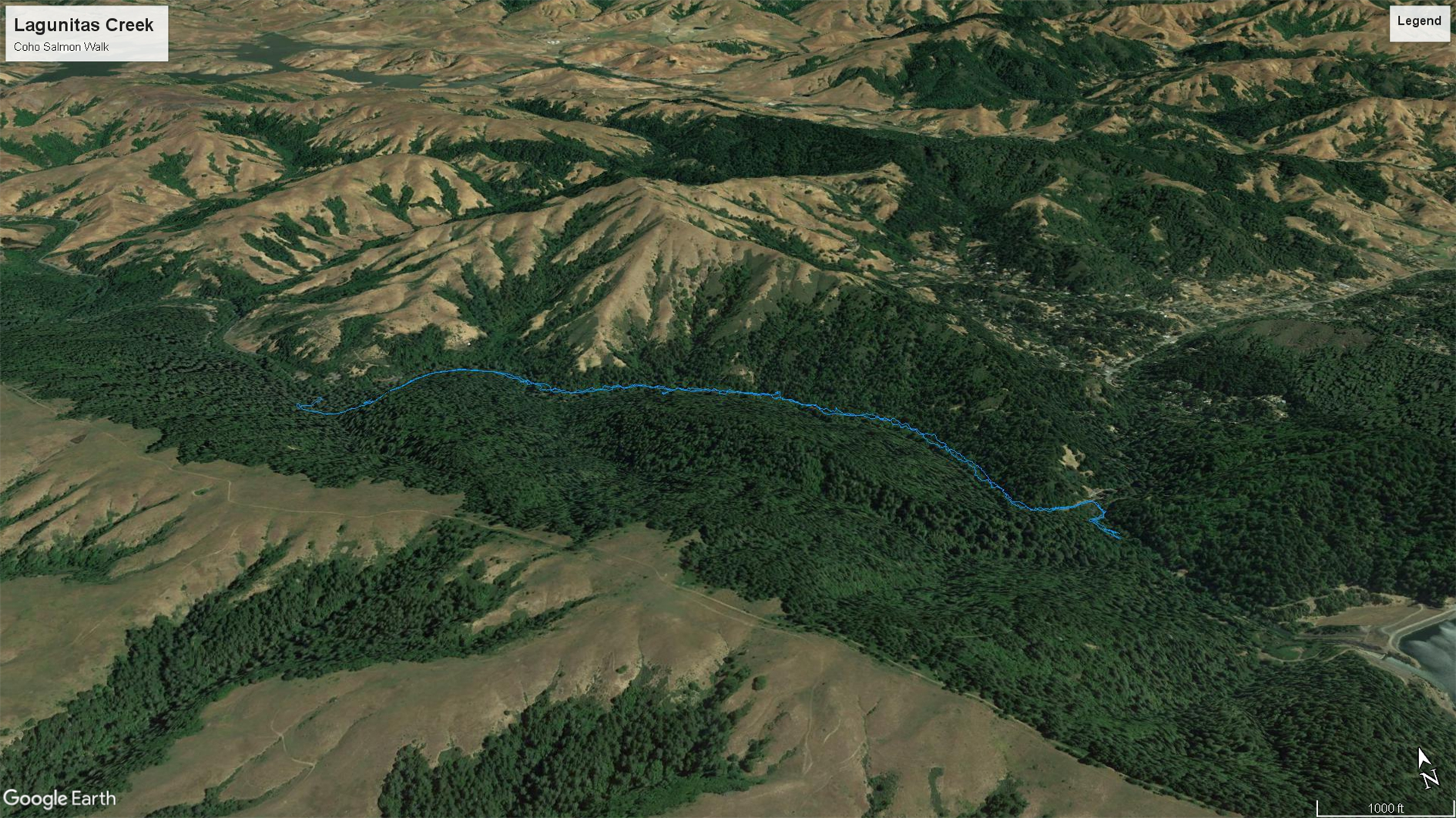


A five mile guided hike from Samuel P. Taylor State Park to the Leo T Cronin Fish Viewing Area along Lagunitas Creek and back again to spot spawning Coho Salmon. The hike was a program offered by Turtle Island and the specific route will vary based on where the salmon are currently active. Having done this once I think I could spot them again without assistance but it's well worth donating to get the full naturalist led experience.
Hike starts at 38.0244751,-122.7291936 (Google Earth).
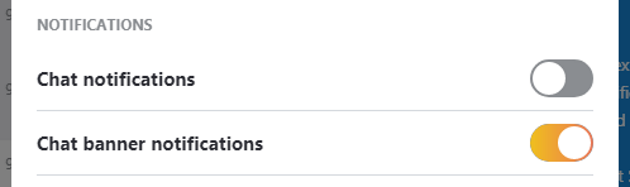
I'm hoping that a chat banner notification is for really great chats only and not some subtle distinction between chat notification types that I can't figure out even after some moderate to heavy googling. If anyone knows seriously please tell me.

4/5
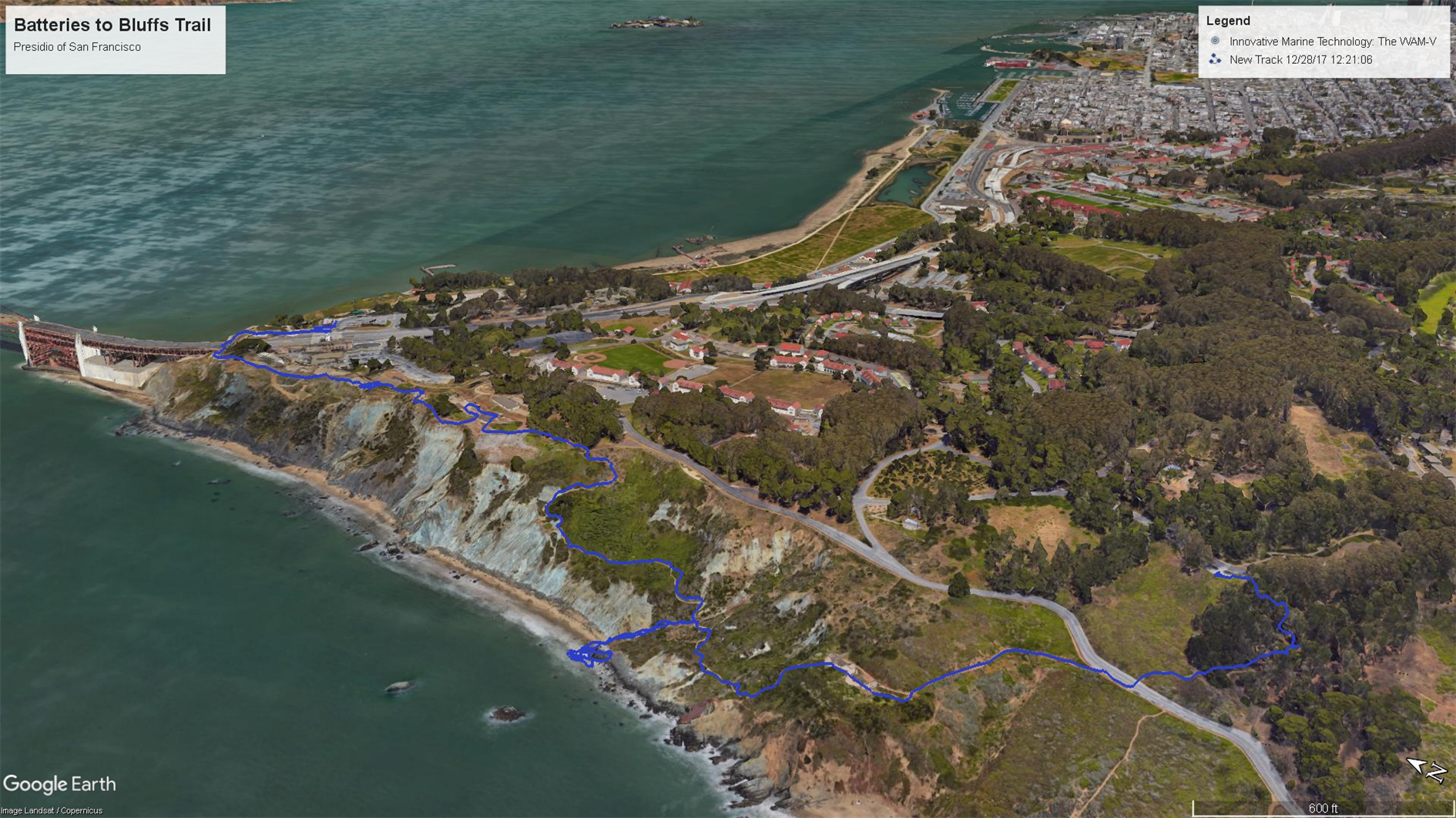

Batteries to Bluffs trail with stop at Marshall's Beach, extended by starting at Immigrant Point and then continuing on to the Golden Gate Bridge.
Hike starts at 37.7962571,-122.4780047 (Google Earth).
Robert Ellison's blog, I Thought He Came With You, on the Fediverse via fed.brid.gy. Photography, time lapse, programming, politics, hikes and more.