I built my ideal flight tracker from bitter experience. Planes, of course, leave late or arrive early. They often drop off tracking for an hour or more, especially on polar routes. You might also forget to download a track while exhausted after a long trip and then it's unavailable by the time you remember to go back and look at it.
This Google Apps Script project uses the FlightAware API to make this a hands off process. You just put your flights in a spreadsheet in advance and come home to a folder of tracking data. If a flight stops tracking, the script projects its path on a great circle route to the destination airport. When tracking comes back online the script recomputes the projected data to the new good location, leaving you with the best possible version of the data.
(I'm about to leave on a trip that will take me all around the planet - the third time I will have done this, and hopefully the first with an excessively accurate GPS track as a souvenir).
In Google Drive create a new spreadsheet with a Flights tab, and a folder to store the flight tracks. Sign up for the FlightAware AeroAPI and grab an API key. Check that you're comfortable with the pricing - I find it's pretty reasonable for personal use. Once that's ready, create a Google Apps Script project and paste the following script into Code.gs:
I'm not including the code here, but you'll also need this script for airport locations. Add an Airports.gs file to the same project and paste it in.
Edit Code.gs to add your API key, the configuration spreadsheet, and the folder for flight tracks.
Finally, run the setup function from the Apps Script debugger. You'll be prompted to authorize the script, and a sample row will be added to the configuration spreadsheet in the Flights tab. The script will also be scheduled to run every ten minutes. You can now add upcoming flights to the spreadsheet. Once you've got this far, I recommend adding a test flight to make sure everything is working before tracking something that you care about.
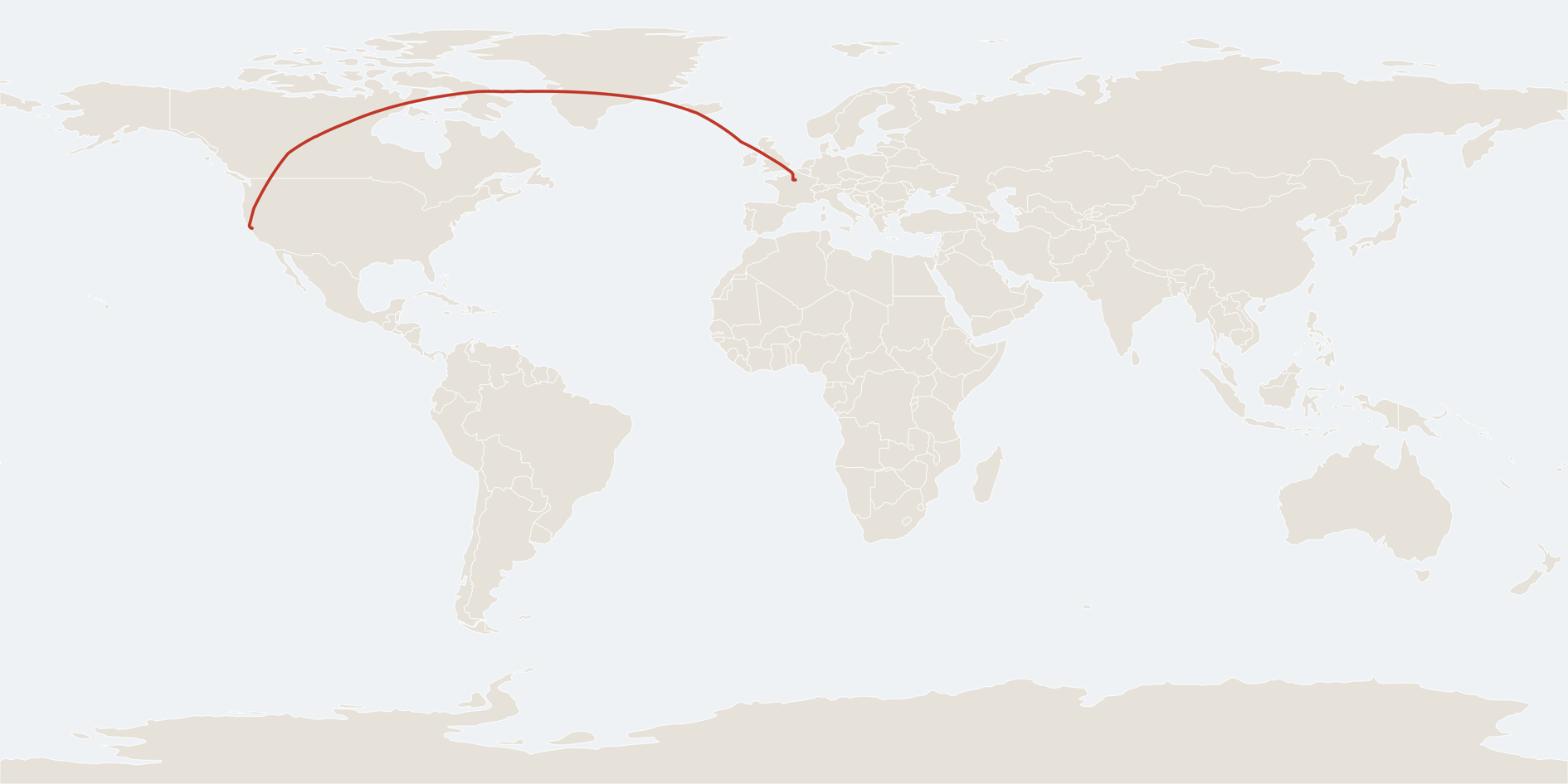
This is the first Apps Script project I've released that is 100% written by Claude Code - I didn't touch a line of it. I'm sharing because of my painful experience with flight tracks that didn't meet my needs, and the extensive product management process of smoking out edge cases and testing until I had a solution that really works. The image above is a test track from Paris to San Francisco (a randomly chosen flight while I was debugging) and it has two sections where data dropped - the end result captures the actual route as far as possible and I'm really happy with the result.
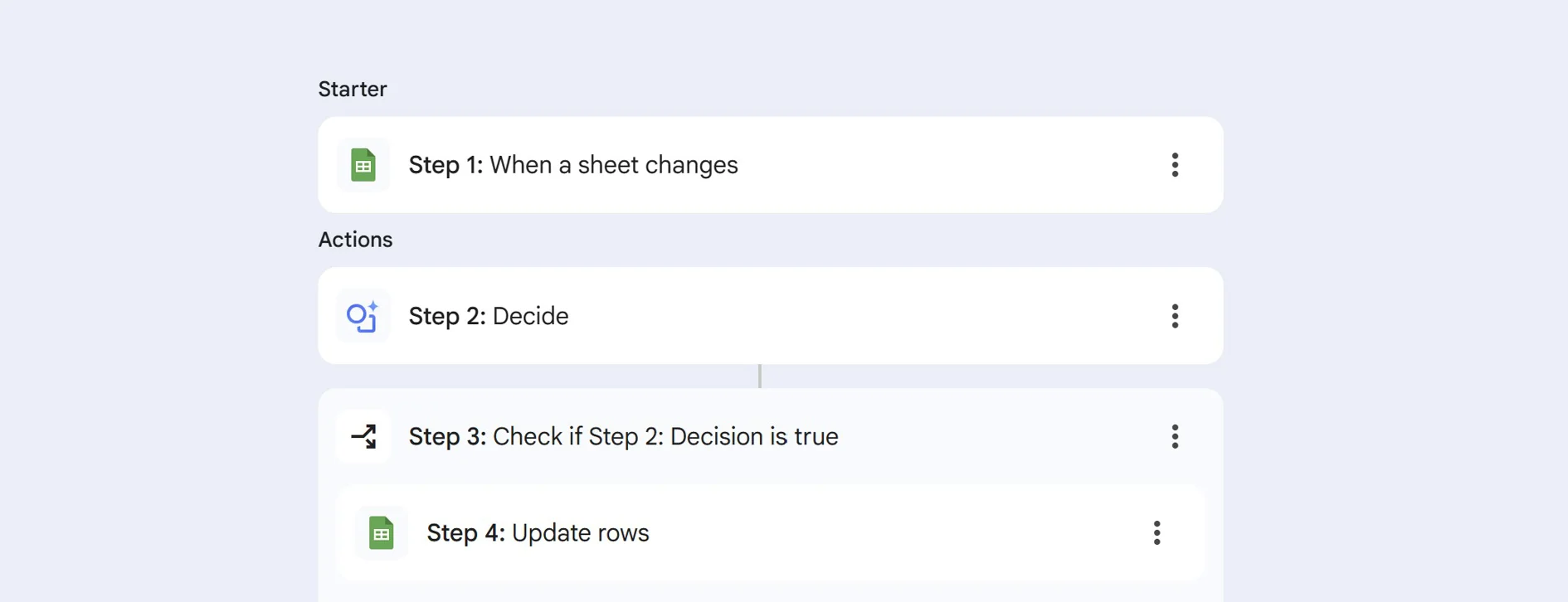
As an Apps Script addict I was excited to experiment with Google Workspace Studio. It's a no code automation tool in the typical flowchart style with the addition of Gemini, so you can use AI for decisions and text manipulation. Unfortunately it failed hard on my first task.
I have a spreadsheet that pulls in Google Fit data, and another one that combines that with other goals to create an overall lifestyle score. Occasionally I copy data from one sheet to the other and automating this has been on my todo list for years with absolutely no chance of getting to done. Workspace Studio should have made this easy.
Building the flow was straightforward, but the steps that write new data were flagged as being in an error state, although no actual errors were flagged in the configuration for the steps. Opening and closing the flow unsettlingly cleared the errors. I started the flow and hoped for the best, but got this error:
"Couldn't complete. Check that the spreadsheet is private and doesn't use the IMPORTRANGE function."
At first I thought this must be inverted and the sheet needed to be shared in some way... but no, it's true, you can only update a private sheet. Which is useful in a trees falling with no one watching kind of way.
I share this mostly because googling the error came up short (and the AI overview is unhelpfully talking about sharing the sheet). Workspace Studio is only a few months old and hopefully this limitation will be fixed. There are some nice features in preview, like webhooks, raising the prospect of handing over to apps script if the flow can't do quite what you need. This should be a nice piece of the AI automation puzzle as it matures.
In terms of traffic this blog has always been driven by code. Extracting step counts from Google Fit, automating Azure monitoring, pushing the limits of Apps Script, and so on. Over the past year referral traffic is solid, but Google Search isn't interested any more. It's the same trend as Stack Overflow - programming questions are now answered by LLMs. I do the same thing and so I'm responsible as a user (I used to answer my own questions disturbingly often), and as a content creator (according to WaPo this blog is 0.00002% of CommonCrawl: transformers also die in darkness).
Can I be a social network instead?
I have had a vague integration with Bridgy Fed for a while. This syndicates posts into the Fediverse and will accept comments back but has always been a bit one sided. I just tightened this up a bit and added support for follows, and did a little following. Implementing all the microformats is a lot easier with LLMs. I'm never going back to a social network that I don't own, even a well intentioned Mastodon server. But I'll interoperate all day and iterate in an IndieWeb direction.
You can follow @ithoughthecamewithyou.com@ithoughthecamewithyou.com and starting now I can follow back.
Roko's basilisk is the improbable theory that advanced AI in the future will punish anyone who failed to help speed the development of the AI.
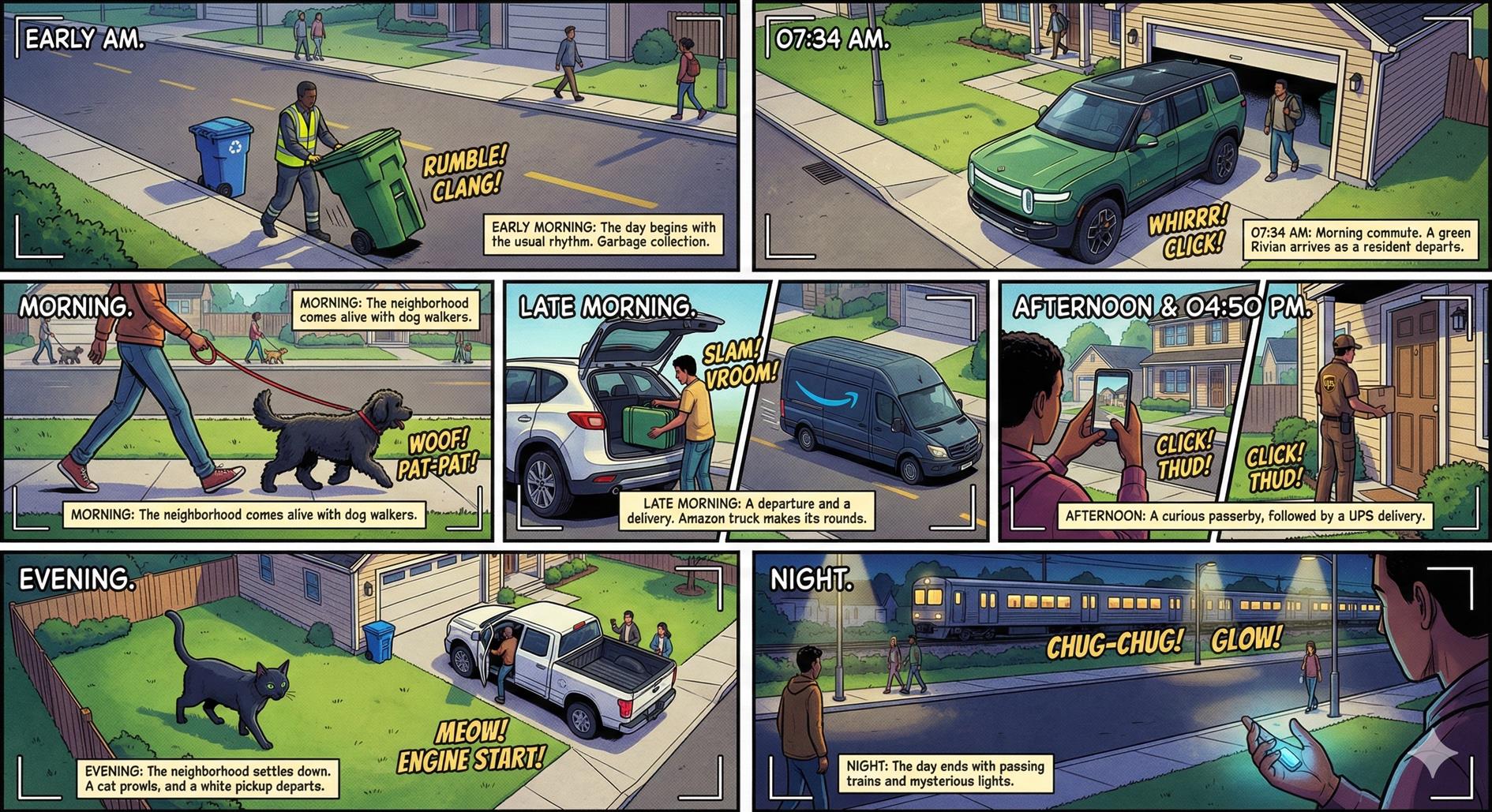
I'm coining Rob's basilisk, which is the far more likely theory that AI will eventually torture people who made it watch home security cameras. Here's a gem from mine:
"The day began with regular neighborhood activity, including several individuals walking by. Early morning saw garbage collection services, with a person in a yellow vest moving green garbage cans and later a blue recycling bin was picked up. Around 7:34 AM, a person exited the Garage, and shortly after, a green Rivian SUV pulled into the driveway, with a resident exiting the vehicle as the garage door opened. Throughout the morning, numerous people walked dogs, including one with a black dog on a red leash. Later in the morning, a person was seen putting a green suitcase into the trunk of a white SUV, coinciding with an Amazon delivery truck driving by. In the afternoon, a person was observed taking a picture of the house. A UPS delivery person delivered a package around 4:50 PM. As evening approached, a cat was spotted walking across the Backyard, and two people got into a white pickup truck from the Garage. The day concluded with continued pedestrian activity and several trains passing by, including a person seen holding a glowing blue object in the evening."
Nearly a decade ago I whipped up a script to send my Nest footage to the Google Cloud Vision API. The twist was that it only notified me when it saw something novel. It was pretty chatty to start with, and then every few weeks I'd get an alert that it had spotted an ice hotel or ballistic missile submarine. At that point I turned it off (maybe this will save me one day).
Some terrible part of me wants to build a RAG database of Google Home Premium Advanced notifications so that I can do the same thing in prose, and never miss anything unusual on my street. A more practical part realizes that the glowing blue object is probably a phone.
Here's a simple Google Apps Script to monitor for new OpenAI models:
To get this running, paste into a new Apps Script project and enable the Gmail API under services. Add your email address and OpenAI API Key at the top. Run a couple of times and you should get an email with all the current models and then nothing the second time unless you get lucky. On Triggers set a scheduled execution with whatever frequency feels good (I use daily) and you're all set.
I want to do two things with my digital photos. First, keep them safe, especially all those precious memories of random parking meters and unfathomable HVAC mechanisms. Second, enjoy looking at the small subset that are precious family moments. I'm not a special snowflake, these basic requirements should represent a large and competitive market. Unfortunately I'm not holding my breath for much in the way of consumer friendly regulation for the next four years in the US.
Google is making some changes to their Photos API next month, which amount to "Get the fuck out of our Photos API". They're a polite organization so they phrase it a little differently: "We're excited to see the creative solutions developers will build using the new Picker API and the updated Library API.". The developer documentation is a little more pointed: "If your app relies on accessing the user's entire library, you may need to re-evaluate your app or consider alternative approaches."
I have an Aura Carver Mat, a nice digital photo frame that I synced to a shared Google Photos album. Easy for me to add photos, way too easy for the kids to add photos - a fantastic device. As of next month it's ewaste though. I'm not going to upload photos slowly through some picker API like an animal. I'm going to end up building something complicated out of a Raspberry Pi (adds to actuarially unrealistic to do list).
This change doesn't impact backup, because that was already broken. For a while Google Photos nicely integrated with Google Drive and I ended up with a local copy of everything that I could then backup through other means. I'm never going to trust any one company to look after important files and so my philosophy is to backup twice online and once to an external hard drive that lives in a fire safe. (At one point I even built a backup company based on this model).
Google killed the Drive integration and so I MacGyvered together an apps script based solution that used the Google Photos API. This revealed to me that the Photos API would not return location information. Even worse it was impossible to get the full resolution version of a video to download. So it's not like I was in love with the API before this most recent change.
My current approach is a mix of sad and awesome. The sad part is that I use Google Takeout once a month to get an archive of all my online photos. Thankfully this still works. The awesome - I wrote this photo sorter tool that takes the messy download and organizes it by year and month. And I also wrote a volume shadow copy tool that lets you backup a drive without getting hung up on locked files. Those pieces get my photos safely to an external drive, and I upload to Amazon Photos too (the third leg of my backup stool).
This simple script adds useful AI to Todoist and runs in the cloud on Google Apps Script.
I use Todoist to run my life, and my dream is for it to be able to complete certain types of tasks for me. With OpenAI Operator and Anthropic Computer Use this is getting closer and closer to reality. Yes, there is a risk that Todoist spends all of my money on paper clips. But there is also the upside that it will eventually do my weekly shopping, pay my bills and call back the dentist's office. Google's new Ask for Me is promising too, even if right now it's just going to bother nail salons out of existence.
I already put together an Alexa replacement using a Raspberry Pi and the OpenAI realtime API. It switches lights on and off, adds things to my to do list, figures out when the next L is coming and more (I'll blog more about this soon). One thing I learned is that this kind of thing can get pretty expensive. I can see why Amazon is procrastinating on an LLM Alexa. But costs keep going down, and the future will get more evenly distributed over time.
The first version of this script has two objectives. Respond to tasks, and create calendar events. Here's the script:
To get this working you need API keys from OpenAi and Todoist. Perplexity is optional, if you have a key add it at the top. It only works with tasks that have the right label, ai is the default - you can change this with AI_TASK_LABEL. I initially developed this with o1, but it looks like the tool use was rushed out too quickly and it calls the same tool repeatedly. GPT-4o works well enough and you can test switching out the model by changing OPENAI_MODEL.
Quick configuration guide - create a Google Apps Script project in Google Drive. Paste in the code above and add your API keys and any other desired configuration changes. Go to Project Settings in the right hand navigation and make sure your time zone is correct. Then go to Triggers and schedule the function trigger to run periodically (I use every 5 minutes). You should be done.
Back in Todoist add the ai label to a task (or whatever label you set in the script) and the AI will respond. With the current script there are two use cases - ask it to create an event (it can invite people, add details to the description, etc.), or ask it to research some aspect of the task you're working on. I think this is helpful because it has the full context of the task, and while you're working in Todoist it's useful to store the history there as well.
The point here is to extend the number of tasks that the script can take on. Add new tools for the AI to consider in the getTools() function, and then wire that tool into an implementation in generateAIResponse(). createCalendarAppointment() is a good example of using built in Google services - as well as the calendar it's pretty easy to interact with email, Google docs and many more. I'm planning to add file uploads as well, and will update this post with iterations of the script that add helpful functionality.
OpenAI recommends around 20 tools as the maximum. At that point it might be necessary to break this up into multiple assistants with different tool collections.
Let me know in the comments if you manage to use this to start crossing anything off your list.
Updated 2025-02-17 01:18:
Updated the script to support images and Perplexity.
Image support takes advantage of multimodal input. Any image attachments will be sent as part of the conversation. This uses the large thumbnail in Todoist by default. It supports JPEG, GIF, PNG and WEBP. If a thumbnail is not available it will send the full size image without resizing, depending on how large this might not be accepted by OpenAI.
Perplexity is implemented as a tool (so OpenAI is always called, and it may optionally call out to Perplexity to get more information). This is useful for web search, local search and knowledge past the training cutoff for the OpenAI model. It's optional, if you don't include a Perplexity API key then it just won't be used.
Here's a simple use case - add a photo of a book and ask Todoist to find the URL where you can order it on Kindle.
I haveoccasionallybeencriticalofAndroid, so I'm delighted to have something positive to report. For even fairly long articles I can now read the whole thing!
Over the last few updates my phone has become almost useless for reading. I'm probably an edge case in the TikTok era, but reading is important to me. Android has got progressively more psychotic about preserving battery life with Adaptive Battery and the war on background services and numerous other 'enhancements'. If I take my attention away from what I'm reading for a split second Android kills the process, plows salt into the memory it once occupied, and emails the developer to request an environmental impact statement.
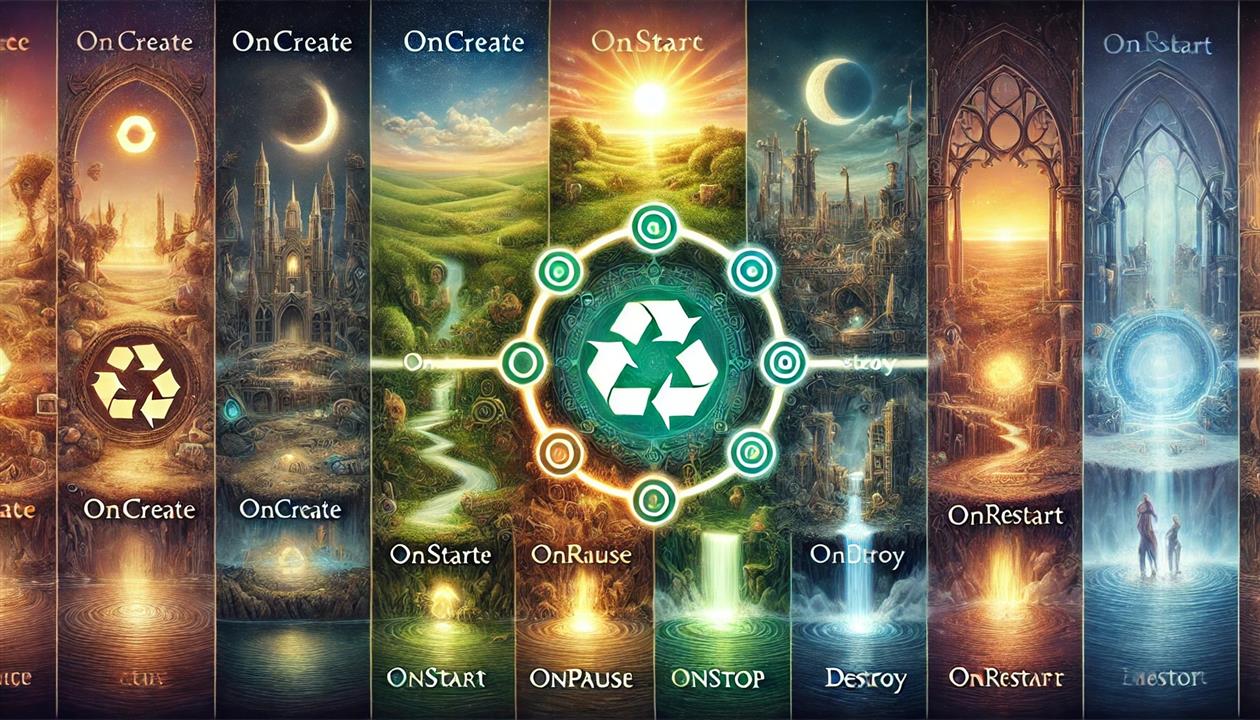
In theory none of this should be a problem because Android has an activity lifecycle that tells the app it's going to be hung, drawn and quartered. The app can then save the current state and restore it when the user comes back to the app. Of course many developers can't be bothered with implementing this properly and Google seems to set a very bad example here. Chrome - back to the top of the article for you! Google news - full reload of a fresh slate of stories so the one you were reading isn't even in the list any more.
Android 15 blissfully fixes this and has done more than exercise, diet or beta blockers for my blood pressure.